
My career never ran in a straight line — commerce, CA, photography, a family business, banking, project finance, CRM and entrepreneurship. Each pivot added a lens, and together they became my biggest strength.
- A non-linear career can become an advantage, not a gap.
- Every role adds a lens — owner, employee, finance, process, technology.
- The value often lives in the space between perspectives.
- You don't have to know everything; you need to know how to find the right expertise.
If you had looked at my career from the outside at any point, it would have looked confusing. It looked confusing from the inside too.
Commerce. CA. Photography. A family business. Credit. Banking. Project finance. CRM. Technology. Leadership. Entrepreneurship. Writing.
For a long time I thought of these as detours. Today I think of them as lenses.
Foundation: commerce and CA
Commerce education and CA articleship gave me an early foundation in finance, discipline and how businesses work on paper. The CA path changed — but the learning remained. I still read a business through its numbers before anything else.
Exploration: photography and a family business
Working outside a conventional path brought something no classroom could: direct exposure to customers, responsibility, uncertainty and running something of my own. You learn very quickly that a business is not a spreadsheet. It is people making decisions under pressure.
Finance: credit, banking and project finance
Credit, banking and project finance taught me how businesses make decisions around money, documentation, growth and risk. Sitting on the lender's side of the table, you see what owners often don't: where the story and the numbers don't match.
Technology: Zoho and business systems
The shift into CRM and technology revealed something that felt natural rather than learned. I could sit with a business owner, understand what was really going on, and turn it into requirements, processes and systems people would actually use.
Not as a developer — as the person who understands both sides.
Building: leadership and entrepreneurship
Today I work as a Director at Reformiqo and build products through The Tiny Apps Company — SpacePartner for coworking spaces and ERPBlueprint for ERP requirements. Product building turned out to be another way of doing the same thing: turning recurring problems into focused tools, without losing sight of the business behind the software.
What the pivots added up to
Each chapter taught me to look at a problem from another side:
- the owner's side
- the employee's side
- the finance side
- the process side
- the technology side
My value is often in the space between those perspectives. I am not an expert in everything. I know how to connect the right things — and how to find the right expertise when something falls outside what I know.
If your career looks like a zig-zag
Don't rush to apologise for it. Ask instead: what does each chapter let me see that others can't?
Nothing you learn is wasted. Sometimes it just takes a few more chapters before you understand what it was for.
Frequently asked questions
Is it bad to change careers many times?
What did Mayank Kariya do before technology?
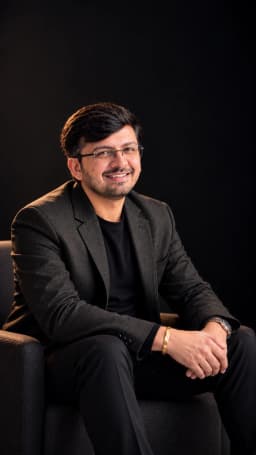
Mayank Kariya
Business and technology thinker. Director at Reformiqo Business Services, founder of The Tiny Apps Company (SpacePartner, ERPBlueprint) and author. He makes complex things simpler. More about Mayank